
Prambanan Temple Tourist Attraction
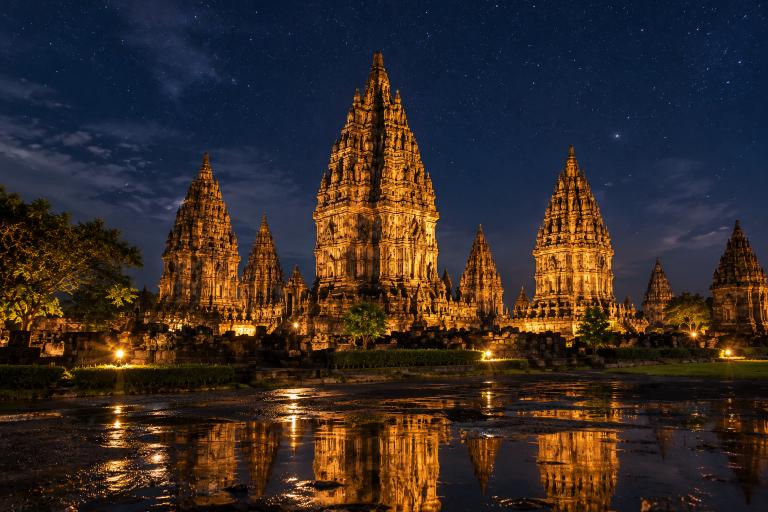
Prambanan Temple is one of the most popular tourist attractions in Indonesia and a must-visit destination for anyone exploring Yogyakarta. Known for its towering stone shrines, detailed carvings, and deep connection to Hindu heritage, Prambanan offers visitors a rare opportunity to experience the grandeur of ancient Javanese civilization. For travelers seeking an iconic Prambanan temple tourist attraction, Prambanan delivers history, culture, and beauty in one remarkable site.
Prambanan is located about 17 kilometers northeast of Yogyakarta city center. Its convenient location makes it easy to reach by car, taxi, online transportation, or organized tour. Many travelers combine Prambanan with other popular destinations such as Borobudur, Sultan Palace, Malioboro Street, and Mount Merapi.
The temple complex was built during the 9th and 10th centuries under the Mataram Kingdom. It was designed as a major center of Hindu worship and dedicated to the Trimurti: Shiva, Vishnu, and Brahma. The central Shiva Temple is the tallest structure in the complex, reaching about 47 meters.
Prambanan is not a single temple but a large sacred area containing hundreds of structures. The temples are arranged in concentric zones, with the most sacred buildings placed at the center. This layout reflects Hindu cosmology and demonstrates the advanced planning skills of ancient Javanese builders.
One of the main highlights for visitors is the Ramayana reliefs. These detailed carvings decorate the walls of the main temples and tell the story of Prince Rama, Sita, and Hanuman. Visitors can follow the narrative as they walk around the temple.
The best time to visit Prambanan is in the morning or late afternoon. Morning visits offer cooler temperatures and softer light, while late afternoon creates dramatic golden views around the temple towers. Visiting on weekdays can also help travelers avoid larger crowds.
Visitors should wear comfortable clothing and walking shoes because the site involves walking across open grounds and uneven stone areas. Sunscreen, drinking water, and a hat are useful, especially during the dry season. It is also important to follow site regulations and avoid touching or climbing the ancient structures.
Prambanan is especially atmospheric during cultural performances. The Ramayana Ballet, often performed near the temple, brings the carved stories of the monument to life through dance, music, and traditional costume.
Prambanan is also connected to the legend of Roro Jonggrang. According to local tradition, a princess was turned into stone after trying to stop a prince from completing one thousand temples in one night.
The temple complex experienced decline after earthquakes, volcanic eruptions, and political changes in the early 11th century. It was rediscovered in the 17th century, and restoration efforts have continued for decades. In 2006, a powerful earthquake in Yogyakarta caused further damage, leading to renewed conservation work.
In 1991, Prambanan Temple Compounds was inscribed as a UNESCO World Heritage Site. This recognition highlights the temple’s outstanding cultural and architectural value. The protected area also includes nearby temples such as Sewu, Lumbung, and Bubrah.
Prambanan is more than a tourist attraction. It is a living symbol of Yogyakarta’s cultural heritage and Indonesia’s ancient history. Its towering shrines, detailed carvings, and sacred atmosphere make it one of the most rewarding destinations in the region.
